China’s Slatwall Displays manufacturers and suppliers serve retailers seeking flexible ways to present products without rebuilding an entire store. Slatwall panels turn open wall space into adjustable merchandising zones. Hooks, shelves, and bins can be moved as assortments change. A row of accessories near a checkout, for example, may need a different layout from a wall of packaged tools.
Retail demand provides useful context, but not a direct measure of slatwall sales. The National Retail Federation’s 2024 U.S. retail sales forecast projected growth of 2.5% to 3.5%, reaching $5.23 trillion to $5.28 trillion. That broad forecast does not prove demand for any particular fixture. It does underline why retailers value displays that can adapt as products and floor plans shift. Paco Underhill, retail anthropologist and author of Why We Buy, describes the store entrance as a “decompression zone”—a reminder that placement and shopper attention matter, not just panel specifications.
Comparing Chinese suppliers requires more than checking catalog photos. Buyers should examine panel material, finish consistency, groove spacing, load guidance, packaging, and sample quality. Ask how tolerances are checked and whether accessories fit the supplied panels. A polished image can hide uneven edges. That is worth admitting. Product specifications and inspection records are more useful than broad claims about quality or savings.
This guide introduces manufacturers and suppliers of Slatwall Displays in China, with attention to product range, customization, and communication. The right partner is not automatically the lowest-priced one. It is the supplier whose samples, documentation, and production process hold up under practical review.
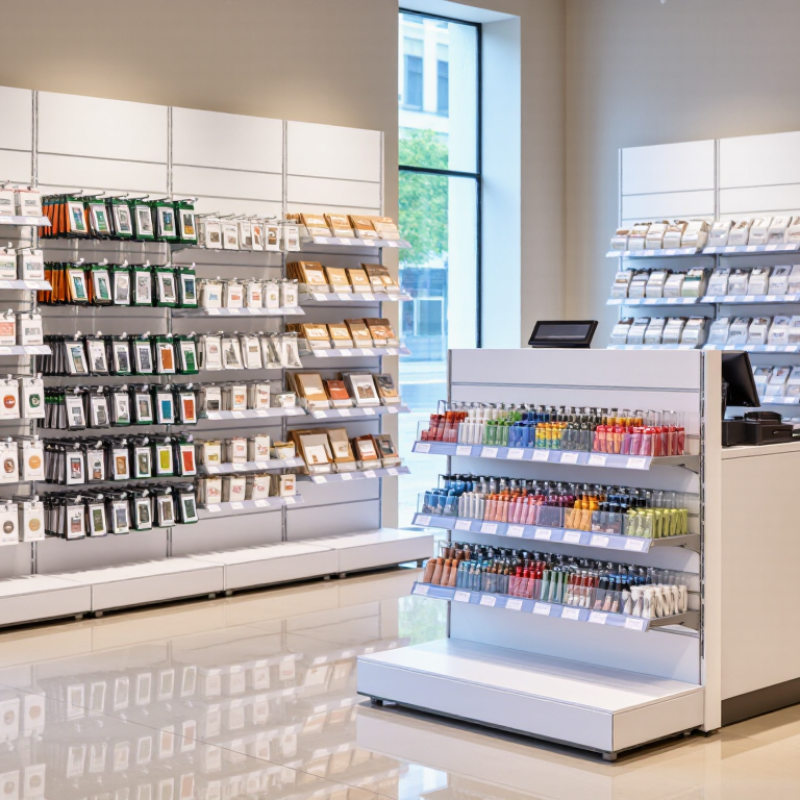
Slatwall displays are grooved panels fitted with hooks, shelves, or baskets. Retailers use them to place products at eye level, group related items, and adjust layouts without replacing an entire fixture. A shop might hang packaged accessories on hooks, then add a shallow shelf for larger boxes. The arrangement is flexible. It also makes product spacing and restocking easier to manage.
The U.S. Census Bureau’s fourth-quarter 2024 retail e-commerce report estimated that online sales accounted for 16.1% of total U.S. retail sales. Most sales remained outside e-commerce, keeping physical stores important places for product discovery. Slatwall can help make those visits easier to navigate: clear groupings reduce visual clutter, while adjustable hooks let staff respond to changing stock. These are practical merchandising benefits, not guaranteed sales results.
There is a catch. A wall can look tidy and still be hard to shop. Hooks placed too close together hide packages; shelves set too high make products awkward to reach. That is easy to miss. Retail teams should test the display from a shopper’s viewpoint, check sightlines, and leave enough space for hands to remove items. The Census Bureau’s data describes retail channels, not the sales effect of slatwall itself, so results should be assessed in each store.
Slatwall displays range from wall-mounted panels to freestanding gondolas, compact counters, and rotating towers. Each suits a different shopping space. Wall panels keep floor areas clear, while mobile units can shift with seasonal layouts. The U.S. Census Bureau reported that e-commerce accounted for 16.1% of U.S. retail sales in the fourth quarter of 2024. Physical stores still need clear, flexible product presentation.
Material choice affects durability and appearance. Medium-density fiberboard offers a smooth surface for paint or laminate, but exposed edges can swell if moisture reaches them. Plywood is sturdier in many settings, though its layered edges may need finishing. Metal panels handle heavy use, while PVC can be lightweight and easy to wipe. Not every low-cost panel stays flat over time.
Look for evenly spaced grooves, reinforced edges, and compatible hooks, shelves, or bins. Metal inserts can help support heavier merchandise. Check the load rating before installation; appearance alone tells little. Small details matter. A narrow shelf may hide labels, and crowded hooks can make products hard to browse. Test the fixture with actual merchandise before ordering a full run.
| Display Type | Typical Construction | Common Materials | Common Design Features | Typical Applications |
|---|---|---|---|---|
| Wall-Mounted Slatwall Panel | Grooved panels fixed to a wall or to supporting battens. | MDF, particleboard, or plywood; grooves may include aluminum or PVC inserts. | Horizontal grooves accept compatible hooks, brackets, baskets, and shelves. Groove spacing is commonly about 3 in (76 mm) on center, though profiles vary. | Retail wall displays, tool storage, and product presentation. |
| Freestanding Slatwall Gondola | One- or two-sided panels mounted on a floor-standing base. | MDF or particleboard panels with a metal, wood, or reinforced board base. | Two-sided layouts can serve shoppers from both aisles; compatible feet or a weighted base help provide stability. | Aisle merchandising, seasonal goods, and flexible retail floor layouts. |
| Slatwall Tower or Merchandising Stand | Compact upright unit with grooved faces, often set on a stable base. | MDF, particleboard, or plywood panels; base may be wood or metal. | Multiple display faces make it possible to arrange accessories around the unit; panel size and base design affect capacity and stability. | Small-item displays, checkout areas, and promotional zones. |
| Mobile Slatwall Display | Freestanding slatwall panels attached to a wheeled base or frame. | MDF or plywood panels with a metal frame and locking casters. | Lockable wheels support repositioning; load capacity depends on the frame, casters, panel, and accessory arrangement. | Temporary promotions, changing store layouts, and trade-show merchandising. |
| Countertop Slatwall Display | Small panel or compact stand designed to sit on a counter or shelf. | MDF, particleboard, or plastic panel with a compact supporting base. | Uses small hooks, mini shelves, or display trays; a broad base helps reduce tipping on busy counters. | Checkout counters, samples, and lightweight accessories. |
| Slatwall Shelf or Accessory Display | A compatible shelf, bracket, basket, or hook fitted into slatwall grooves. | Powder-coated steel, chrome-plated wire, aluminum, acrylic, or molded plastic. | Accessory dimensions and groove fittings must match the panel profile; heavier products require suitable brackets and properly supported panels. | Displaying packaged goods, apparel accessories, tools, and small merchandise. |
| Specifications are typical examples, not universal standards. Panel thickness, groove profile, finish, dimensions, and load capacity vary by product and installation; confirm compatibility and installation requirements before use. | ||||
Slatwall display production usually starts with a shop drawing, not a standard panel. Buyers specify height, width, groove spacing, finish, and the products the display must hold. Manufacturers review these details before cutting, since a few millimeters can affect how hooks sit. It matters. For indoor retail use, teams may select MDF or another substrate based on the display’s weight and setting.
Panels are cut to size, then grooves are routed at set intervals using woodworking equipment. Some designs include aluminum inserts to reinforce the channels. Workers sand edges and apply laminate, paint, or another requested surface finish. Small samples help check color and texture before a larger run. Yet samples cannot reveal every production variation; lighting can make the same finish look different.
Customization may include shaped headers, shelves, bins, or cutouts for product labels. A practical supplier checks dimensions and tests compatible accessories before packing the order. Buyers should confirm load expectations, installation method, and packaging requirements in writing. This avoids preventable rework. Custom sizes can also increase setup time or material waste, so the final design may need adjustment after a prototype review.
China’s leading slatwall display manufacturers and suppliers serve retailers, shopfitters, and distributors seeking flexible wall-mounted merchandising systems. Their capabilities may include panel cutting, edge finishing, laminate application, and accessory production. A well-made panel should have clean grooves, an even surface, and consistent spacing, so hooks and shelves sit securely. Small details matter.
Suppliers commonly offer different panel sizes, finishes, and groove inserts to suit store layouts. Before requesting a quote, buyers can share wall measurements, product weights, preferred accessories, and installation conditions. Ask for material specifications and a sample when surface texture or color matching matters. Confirm packaging details, too; long panels can be vulnerable to corner damage during transport. Clear drawings help, but they do not replace checking a physical sample.
Comparing suppliers on more than price can reduce avoidable surprises. Review production tolerances, inspection steps, lead-time assumptions, and how changes are handled after approval. A supplier may show polished photographs, yet finish consistency across a full order still needs verification. Fit varies. Consider testing a small batch before committing to a larger project, especially when combining panels from different production runs. No single specification suits every shop, and the right choice depends on the merchandise, traffic, and maintenance routine.
China Top Slatwall Displays Manufacturers and Suppliers
Evaluating suppliers means checking more than price and catalog photos. Ask for panel dimensions, core material, surface finish, groove spacing, and tested load capacity. A display holding light accessories may not suit boxed tools or dense household goods. Small details matter. Request a physical sample and inspect the edges, groove consistency, and hardware fit under ordinary store lighting. Confirm production lead times, packaging protection, and how damaged parts are handled. A polished sample is useful, but it cannot prove every production batch will match.
Applications shape the right specification. Clothing shops may need hooks and shelves that can be rearranged quickly, while electronics retailers often need secure shelves and neat cable access. For narrow aisles, measure the fixture depth before ordering; a few extra centimeters can obstruct movement. Ask whether replacement accessories remain available after the initial purchase. That question is often overlooked. Supplier claims deserve practical checks, and written specifications make comparisons fairer.
Industry interest is moving toward modular layouts, mixed materials, and reusable display components. These options can reduce the need to replace an entire fixture when a store changes its layout, though actual waste savings depend on use and transport. Some trends look attractive in photographs but prove awkward during daily restocking. Test a proposed layout with real products, staff reach, and cleaning routines. Not every supplier will provide perfect answers, so record uncertainties and ask for clarification before committing.
Suggested weighting for comparing suppliers (total: 100%). Adjust the weights to fit your project requirements.
Evaluate product quality and compliance, customization, minimum order quantity and lead time, pricing, export logistics, and after-sales support. Slatwall displays are used in retail settings for presenting and organizing merchandise; when comparing suppliers, also ask about modular designs, material options, and packaging. The percentages shown are a buyer’s planning framework, not measured market statistics.
Share wall measurements, panel height and width, groove spacing, finish, product weights, and installation conditions. Include preferred hooks or shelves. Clear drawings help, but they are not a substitute for checking a sample.
Panels may use MDF or another substrate suited to the display’s weight and setting. Finishes can include laminate or paint. Check a small sample under store lighting; colors may look different there.
Inspect the edges, surface, and groove spacing. Try fitting a hook or shelf. Small details matter. A polished sample cannot guarantee every panel in a full order will match.
Ask for tested load capacity and share what the display will hold. Light accessories and boxed tools need different support. Do not rely on appearance alone.
Yes. Options may include custom sizes, shaped headers, shelves, bins, and label cutouts. Custom work can add setup time or material waste, so review a prototype before approval.
Confirm lead times, packaging protection, and how damaged parts are handled. Long panels can suffer corner damage in transit. Ask for these details in writing.
Clothing shops may need rearrangeable hooks and shelves. Electronics displays may need secure shelves and cable access. Measure fixture depth carefully in narrow aisles.
Compare materials, tolerances, inspection steps, lead-time assumptions, and change procedures. Consider a small batch first. Fit varies. Record unanswered questions; some details may still need a second look.
This article explores how Slatwall Displays help retailers organize merchandise, make products easier to browse, and adapt store layouts to changing needs. It introduces common display types, materials, and design features, explaining how options such as different panel finishes, sizes, and accessories can support a range of retail settings. The article also outlines how manufacturers in China produce and customize displays, from selecting materials and refining designs to coordinating production details for specific applications.
Readers will learn how to assess suppliers by considering product quality, customization capabilities, communication, production capacity, and delivery arrangements. The article also reviews where Slatwall Displays can be used and highlights broader industry trends, including flexible merchandising solutions and designs suited to evolving store formats. These insights provide a practical starting point for comparing suppliers and selecting display systems that align with a retailer’s products, space, and merchandising goals.

CraftRack